IRS Appeals and Collection Due Process Hearings in Arizona
A letter that says you have a right to a hearing starts a short clock. Southwest Tax Law prepares and files IRS Appeals and Collection Due Process requests for Arizona taxpayers, and represents them at the hearing.
A Collection Due Process (CDP) hearing is your right to have the IRS Independent Office of Appeals review a proposed levy or a filed federal tax lien before or soon after the IRS acts. You request it in writing on Form 12153, and the deadline printed on your letter is short, generally 30 days.
At Southwest Tax Law we treat that letter as the most time-sensitive document in a collection case. This page explains what Appeals does, which notices carry hearing rights, what happens at the hearing and what comes after. It is general information. Your own letter controls your deadline.
Which IRS letters give you a right to appeal?
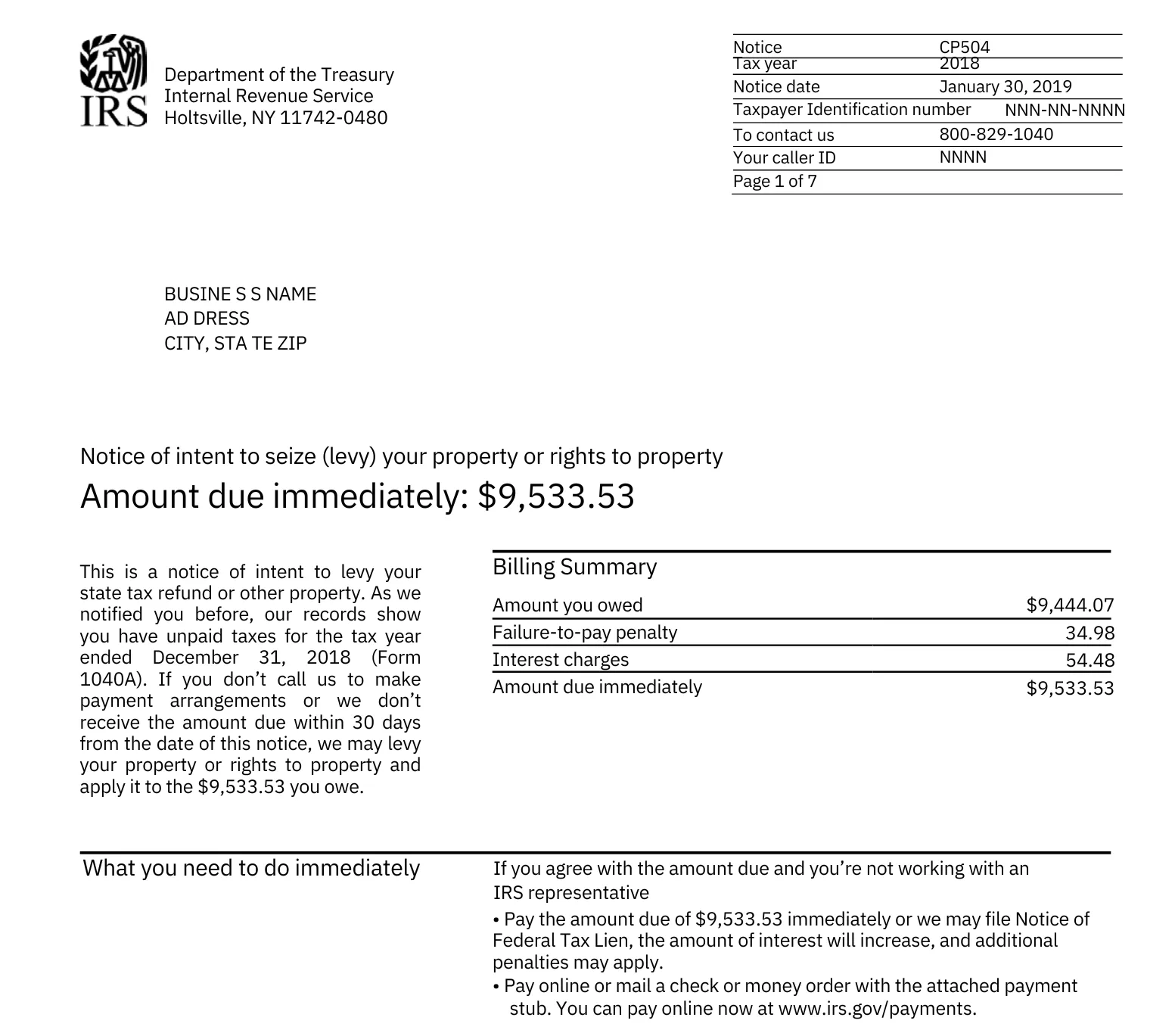
Two collection notices carry Collection Due Process rights. The first is the Final Notice of Intent to Levy and Notice of Your Right to a Hearing, often cited by its letter number, Letter 1058 or LT11. The second is the Notice of Federal Tax Lien Filing and Your Right to a Hearing, Letter 3172. Each tells you how many days you have to ask for a hearing and where to send the request. The statute behind both is section 6330 of the Internal Revenue Code.
Earlier notices in the series, such as a CP504 or a CP14 bill, do not carry CDP rights. They are still worth answering, and our page on IRS notices and letters explains how to read each one. Collection appeals are also available outside CDP. The IRS Collection Appeals Program covers actions such as a rejected installment agreement or a proposed lien, and IRS Publication 1660, Collection Appeal Rights lists which actions can be appealed and how.
Key facts
- The request is made on Form 12153, Request for a Collection Due Process or Equivalent Hearing, or in a signed letter with the same information.
- The deadline is stated on your notice, and the request has to be postmarked or filed by then.
- A timely CDP request for a levy notice generally stops levy action while the hearing is pending.
- The time the IRS has to collect, called the collection statute expiration date, is paused while a timely hearing is pending.
What does the hearing actually decide?
The hearing is held by an Appeals officer who was not involved in your case. Appeals checks that the IRS followed the required procedures and that the proposed collection action is a reasonable balance between collecting the debt and not being more intrusive than needed. You can propose a way to resolve the balance instead of the levy or lien: an installment agreement, an offer in compromise, or currently not collectible status if paying would cause real hardship.
You may raise the amount you owe only in limited situations, usually when you never received a notice of deficiency and had no earlier chance to dispute the tax. That is a legal question, and we look at it before deciding what to argue. If you plan to ask for an alternative, Appeals will expect you to be current on filing and on estimated or deposit payments, and will usually want financial statements. Missing returns often stall a hearing, which is one reason we also handle unfiled tax returns.
How does an Appeals hearing work in practice?
Most CDP hearings run by phone or in writing. After you file Form 12153, the case is assigned to an Appeals officer who sends a letter with a hearing date and a list of what to bring. We usually spend the first week confirming the filing deadline was met, pulling account transcripts, and finding out which tax years and assessments are in play. Then we prepare the financial disclosure and any proposal, and we speak with the officer on your behalf.
The IRS describes the process in its own words on IRS Tax Topic 151, Your appeal rights. It says appeals conferences are informal, you may represent yourself or have an attorney, accountant or other authorized person represent you, and you should be ready to support your position with records. That last point matches what we see: the taxpayer with documents in order has more options than the taxpayer who has to guess.
What if I missed the 30 day deadline?
You may still be able to request what the IRS calls an equivalent hearing, generally within one year of the date of the notice. An equivalent hearing is also held by Appeals, but it does not automatically stop a levy, and the result cannot be taken to the Tax Court. Because the rules for the one year period differ between levy and lien notices, we read the actual letter before saying whether the option is open. If a levy has already landed, our pages on bank levy release and wage garnishment release cover the fastest routes to stop it.
What happens after the Appeals decision?
When the hearing ends, Appeals issues a Notice of Determination. If you disagree, the notice explains your right to ask the United States Tax Court to review it, and the Tax Court states that a collection case petition should be filed within 30 days of the mailing of the notice of determination. The Tax Court guidance for petitioners explains how to start a case. Our firm can carry a matter forward to Tax Court representation when that is the right next step.
If Appeals accepts your proposal, you then have to keep the agreement. Missing a payment or a new filing deadline can let the IRS pull the arrangement back, so we set up reminders and review each year as returns come due.
Appeals is not only for collection
The same Independent Office of Appeals reviews audit results. If an IRS audit ends with a proposed adjustment you disagree with, the report or letter explains how to request a conference, and for larger disputes a written protest is usually required. IRS Publication 5, Your Appeal Rights and How to Prepare a Protest describes the steps. Penalties, rejected offers and trust fund assessments can also be appealed, and our work on the trust fund recovery penalty often begins with a protest to Appeals. For Arizona businesses with sales tax exposure, a state audit follows its own process, covered in our guide to Transaction Privilege Tax audits.
Why use a tax attorney for an Appeals case?
An Appeals officer has settlement authority that a collections employee often does not, and the discussion turns on legal risk as well as numbers. That is where an attorney helps most. We frame the strengths and weaknesses of each side, decide which collection alternative to offer first, and keep the record clean in case the matter goes to court. Our team is a network of ex-IRS employees, enrolled agents, CPAs and licensed tax attorneys, and federal representation is available to clients across Arizona by phone and secure portal. If you want to see how this fits with the rest of a plan, start at our tax debt relief overview or the full list of Arizona tax services.
We do not promise an outcome. Appeals can accept, modify or reject what you propose, and some cases are better settled through a different route. We will tell you which applies after reviewing your notice and transcripts.
What to gather before you call
Have the full notice, including every page, and the envelope if you still have it, since the mailing date can matter. Bring the last two or three years of returns, recent pay stubs or profit and loss statements, bank statements, and a list of monthly expenses. A signed power of attorney on Form 2848 lets us speak with the IRS for you, and we can prepare it during the first call. You can also review the broader picture at common IRS problems before you phone, or request a callback.
Frequently asked questions
How long do I have to request a Collection Due Process hearing?
The deadline is printed on your notice. For most levy notices it is 30 days from the date of the notice. Do not rely on a general rule. Read the letter, calendar the date and file Form 12153 before it passes.
Does requesting a hearing stop the IRS from levying?
A timely CDP request on a levy notice generally stops levy action while the hearing is pending, with limited exceptions. An equivalent hearing, requested late, does not automatically stop a levy.
Can I propose a payment plan or offer in compromise at the hearing?
Yes. Appeals considers collection alternatives such as an installment agreement, an offer in compromise or currently not collectible status. You should usually be current on returns and required payments for the proposal to move forward.
What if I disagree with the Appeals decision?
The Notice of Determination explains your right to petition the United States Tax Court. The Tax Court advises filing a collection case petition within 30 days of the mailing of that notice.
Can Appeals reduce what I owe?
Appeals can consider an offer in compromise, penalty relief and, in limited cases, a challenge to the underlying amount. Whether any of those apply depends on your facts, and no result is guaranteed.
Do you represent clients outside Tucson?
Yes. Federal tax representation is handled by phone and secure portal for clients throughout Arizona.
Ready to resolve this? As the tax attorney team Tucson and Arizona trust, we offer a free consultation with a resolution specialist, available by phone Monday through Friday. Request a callback or call (520) 900-1422.
This page is for general information and is not legal advice. Every tax matter is different, outcomes depend on the facts, and nothing here guarantees a result. Contacting Southwest Tax Law does not create an attorney-client relationship.
Other Ways We Can Help
Visit Southwest Tax Law
Get your free tax debt action plan.
15 minutes with our resolution team. A concrete plan, yours to keep. No obligation, no pressure.